
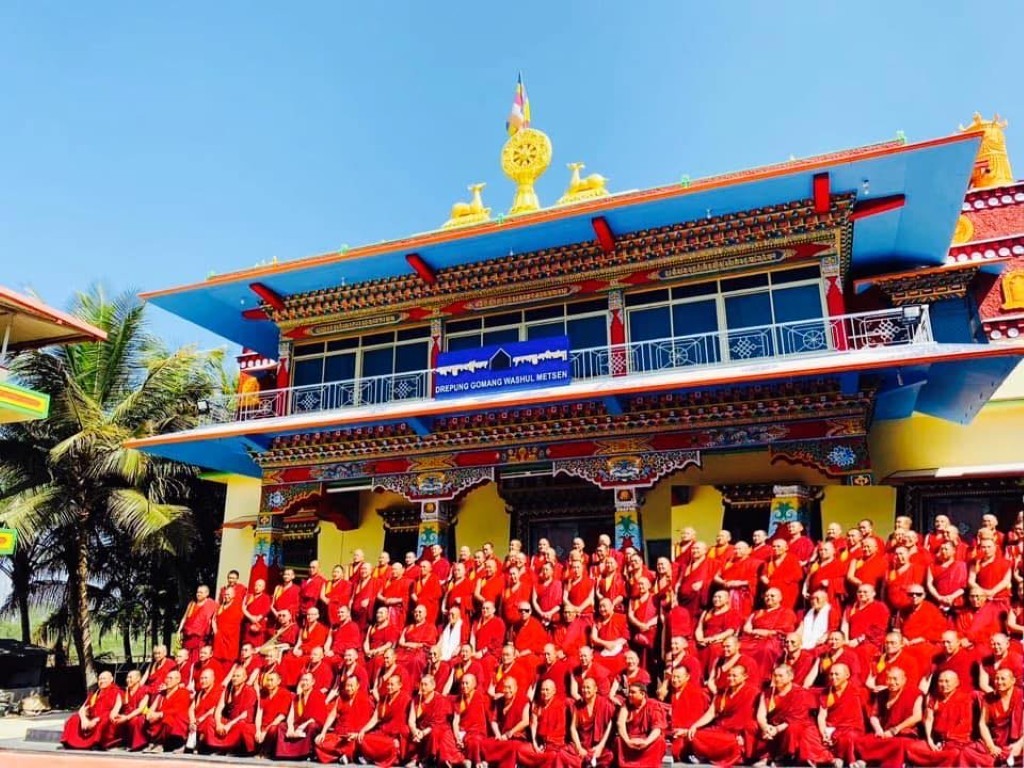
 Washul Metsen belongs to Hardong Khangsten, one of the sixteen khangtsens (regional houses) of the Drepung Gomang Monastery’s , and is the metsen associated with Khunkhen Jamyang Shepa, the owner of the Gomang texts.
Washul Metsen has produced and continues to produce many learned and accomplished masters who have thoroughly studied both sutra and tantra traditions. The primary source of monks for this unit comes from the Kham region. When great changes swept across all of Tibet, a group of monks arrived together at the baksa in exile. Later, though no special separate residence was established for the Hardong Khangsten when the settlement relocated to the south, as increasing numbers of new monks from Tibet arrived daily, difficulties naturally arose regarding accommodation and general necessities. Through the kindness and grace of Kyabjé Yelo Rinpoche, the first Washul Metsen building — a three-story monk’s residence — was successfully constructed in 1997, temporarily alleviating the difficulties.
As the stream of monks continued to arrive in large numbers without interruption, there remained the problem of insufficient space. Around the year 2000, Kyabjé Thomthog Rinpoche sent several monks from the mesten abroad to raise funds, which led to the construction of the new Washul Metsen that has monks’ quarters, and kitchen, completely resolving all difficulties. In December 2002, on the auspicious occasion celebrating the completion of the new metsen , His Holiness the Fourteenth Dalai Lama — the global peace beacon- personally graced the event with his presence, offered prayers and and with great joy held the inauguration ceremony.
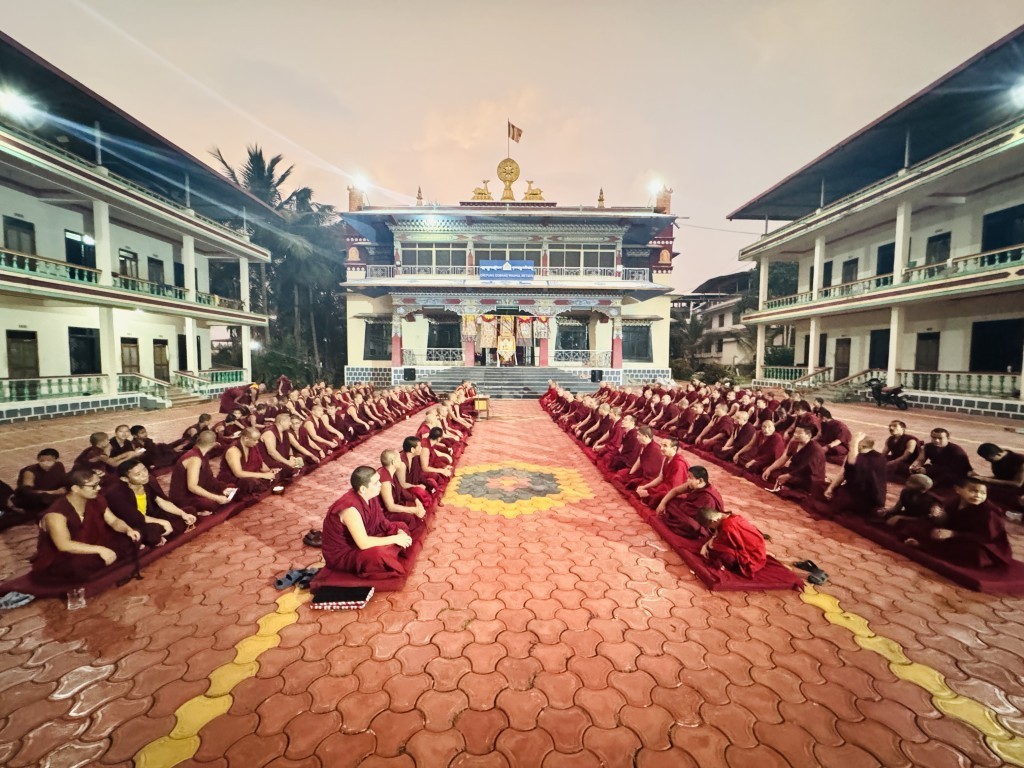 Since the Washul Metsen was formally established in the Tibetan settlement in southern India, over 600 monks have enrolled, of whom more than 200 have completed studies in the five major canonical texts and attained the Geshe degree. Even now, many students continue attending the monastery’s dharma classes and academic programs, and many participate in the major Gelug offerings.
In the meantime, since circumstances changed and it became impossible for monks to come from Tibet, the current stream of monks is drawn from all directions without discrimination— including the Himalayan ranges and Bhutan — and both senior and junior monks continue together to uphold and advance the traditions of study, discipline, and conduct just as before. This is a brief history of the present-day Washul Metsen.